What is Activated Carbon?
Manufacturers of activated carbon powder
Explore the physical mechanism, pore morphology, and thermal activation process that make activated carbon the most powerful adsorption material known to modern industry.
Definition & Pore Development
Because of this intricate internal structure, activated carbon possesses an exceptionally large internal surface area. Just one gram of quality activated carbon can offer an adsorptive surface area exceeding 800 to 1,200 square meters—equivalent to the area of an entire football field. Consequently, activated carbon has the highest volume of adsorptive porosity of any engineered material available to mankind.
The Principle of Adsorption
Adsorption is the surface phenomenon whereby fluid molecules (liquid or gas) are attracted and held to the solid surface of an adsorbent by van der Waals forces. Unlike absorption—where a substance is drawn into the bulk volume of a liquid or solid—adsorption concentrates dissolved organic pollutants, color molecules, and odor compounds exclusively on the internal surface of the carbon pores.
Serve as entry transport conduits into the interior of the carbon particle.
Primary sites for larger color bodies, dyes, and pharmaceutical molecules.
Traps low-molecular-weight compounds, volatile organic chemicals, and chlorine.
Types of Activated Carbon Manufactured by Shree Ashapura Carbon
1. Wood Based Activated Carbon
FlagshipEngineered from selected virgin wood charcoal through high-temperature steam activation. Wood-derived activated carbon naturally possesses a well-balanced distribution of mesopores and macropores, rendering it exceptionally effective for liquid-phase decolorization, large organic compound removal, and municipal wastewater treatment.
2. Steam Activated Carbon Powder (PAC)
Fine MicronManufactured by pulverizing activated carbon into an ultra-fine mesh distribution (200 to 300 mesh). Because of its minute particle size, steam activated powder provides rapid adsorption kinetics and immediate contact, making it the preferred choice for batch water treatment dosing, chemical bleaching, and edible oil refining.
3. Unwashed Grade Activated Carbon
Industrial Filter BedsA cost-effective, high-surface-area grade specifically engineered for heavy industrial effluent treatment plants (ETP) and sewage treatment plants (STP). It offers robust filtration beds for bulk COD, BOD, and total dissolved solids reduction without the premium processing cost of acid-washed grades.
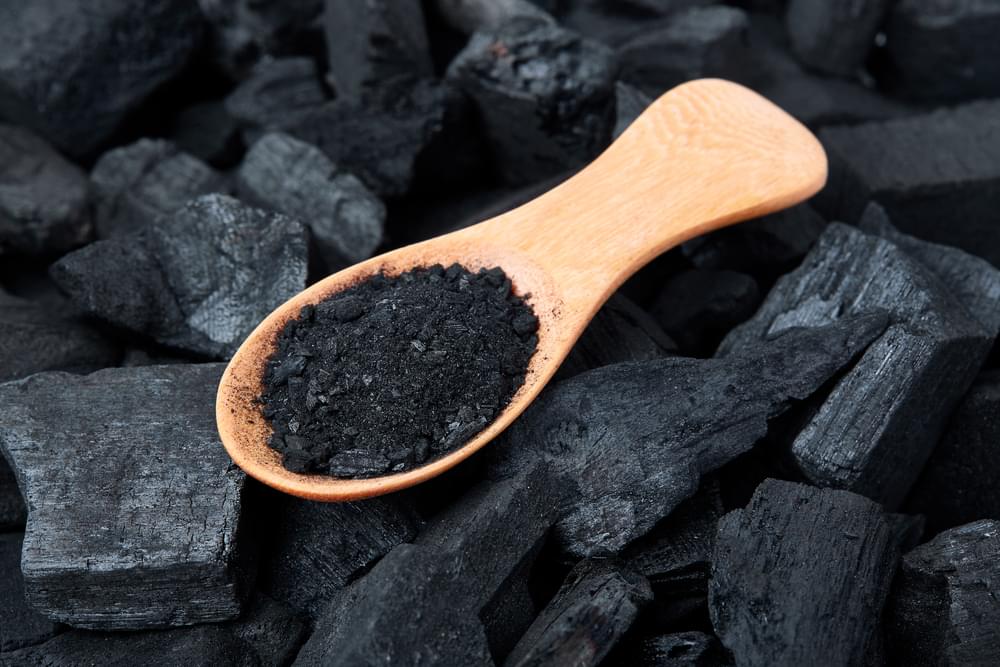
Laboratory quality testing conducted on each production lot at our Mindiyala (Anjar) facility.
Need Technical Assistance?
Speak directly with our technical team in Gandhidham to select the ideal Iodine number and mesh size for your application.